Lunar Fuel Costs: NASA Reveals 22 Launches Needed
A new internal estimate suggests the Artemis program will require twenty-two Starship flights to fuel a single lunar landing mission.
By Juan Gonzalez ·
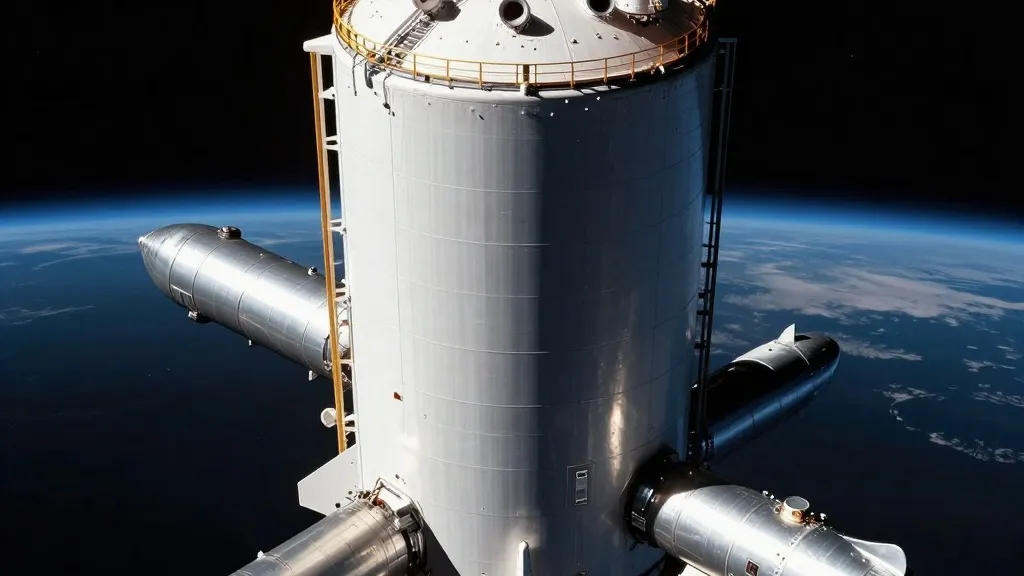
NASA has long guarded a specific number with intense secrecy. It is not the cost of the budget or the weight of the payload. It is the exact count of rockets required to send a crew to the Moon. For years, the agency has treated this figure like a state secret, refusing to give a straight answer. That silence ended this week. A new estimate indicates that twenty-two Starship launches are now needed to fuel a single lunar lander. This number is significantly higher than previous hopes and raises questions about the timeline for returning humans to the Moon this decade.
The hesitation comes from a long history of shifting targets. The metric in question is the number of Starship launches required to create a fuel depot in low-Earth orbit. This depot must hold enough liquid oxygen and methane to send a lander to the Moon, land it, and bring the crew back to lunar orbit. Until now, NASA officials have consistently declined to commit to a specific count. In 2023, Lisa Watson-Morgan, then the director of NASA’s Human Landing System, told reporters that the agency had a general idea but was reluctant to state it precisely. She later described the requirement as being in the 'high single digits to the low double digits.'
Those earlier estimates suggested a requirement of roughly a dozen flights. That number implied a logistical operation where SpaceX would launch one 'depot' Starship, followed by eleven 'tanker' Starships. The tankers would transfer propellant to the depot, filling it for the lunar voyage. Other officials have occasionally cited numbers in the 'high teens.' The underlying hope has always been that SpaceX would rapidly increase the lift capacity of the Starship vehicle. A more powerful rocket would mean fewer tanker flights are needed to fill the depot, making the entire operation more efficient and less risky.
However, concerns are growing among some NASA officials. They worry that the dramatic improvement in lift capacity may not arrive soon enough. If the vehicle does not become significantly more powerful, the number of tanker flights will remain high. This creates a tension between the ambition of the Artemis Program and the current capabilities of the hardware. The goal is to land humans on the Moon within this decade. The new estimate of twenty-two launches suggests that the window for that goal is narrowing. It is unclear if the timeline will hold or if the program will need to adjust its expectations.
The revelation came during a routine quarterly meeting of the NASA Aerospace Safety Advisory Panel held on Thursday. The panel is an independent group that advises the agency on safety risks. During the session, panel member Charlie Precourt, a former NASA astronaut, discussed the risks associated with the Artemis Program. He highlighted the challenges of landing humans on the Moon and the complexities of the fueling operation. His comments provided a rare glimpse into the internal calculations that have previously been kept under wraps.
The shift from 'low double digits' to twenty-two represents a significant change in planning assumptions. It suggests that the fueling process in orbit will be more complex and time-consuming than earlier models predicted. For SpaceX, this means a higher volume of tanker missions. For NASA, it means a higher degree of dependency on the success of each individual launch. The margin for error shrinks as the number of required flights increases. Each additional tanker flight adds another opportunity for failure or delay. The agency must now balance these operational risks against the political and scientific imperative to land astronauts on the Moon.
The next step is to see how NASA and SpaceX integrate this new estimate into their operational plans. Will they aim to reduce the number of launches through technological upgrades, or will they accept the higher volume as the new baseline? The answer will likely depend on the progress of Starship's development in the coming months. For now, the number twenty-two stands as the current benchmark. It is a high number, but it is a concrete one. The era of vague estimates is over. The agency has finally put a number on the cost of reaching the Moon, and it is a number that demands a lot of rockets.
Source: Ars Technica