Tesla Reveals Fighter-Jet Interface for 2028 Roadster
A new video exposes the cockpit’s focus on telemetry and thruster management, highlighting the vehicle's extreme performance specifications ahead of public displays.
By Thabo Mokoena ·
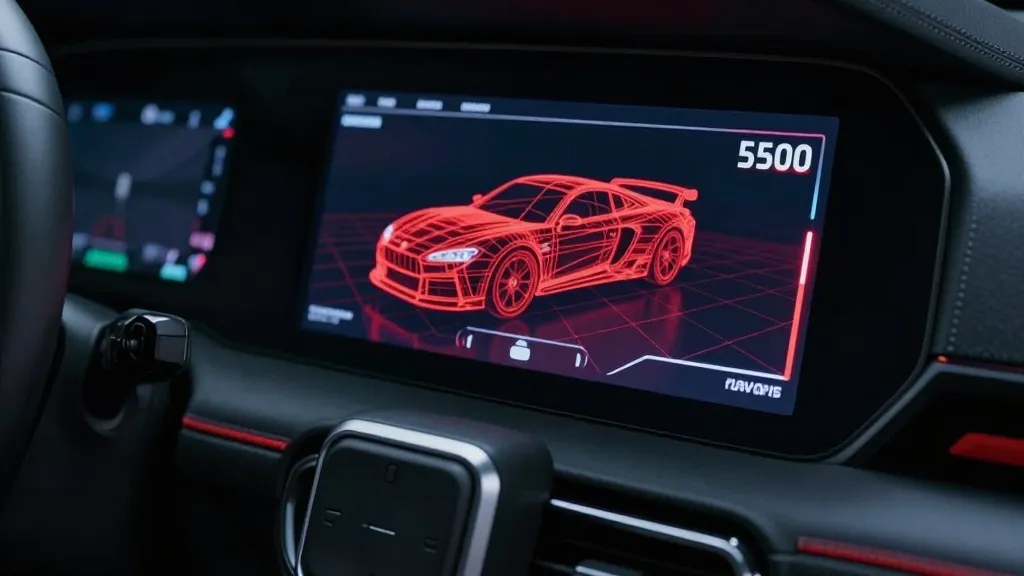
Five thousand, five hundred PSI. That is the pressure rating displayed on the status bar of Tesla’s next-generation Roadster, a figure that underscores the mechanical intensity of the vehicle’s propulsion system. The company has released its most detailed look yet at the car’s interior, offering a glimpse into the digital environment that will define the ownership experience for the flagship model.
The numbers presented in the new footage highlight a focus on precision and speed. The interface displays live telemetry, including brake and motor temperatures, as well as individual pressure and temperature readouts for each tire. For the top-tier configurations, Tesla lists 0 to 60 mph acceleration times of under 0.9 seconds for the Thrust version and under 0.59 seconds for the Rocket variant. These figures are tied to cold gas thrusters fed by carbon overwrapped pressure vessels, a hardware component Tesla showcased in Waco, Texas, on October 15.
The user interface was designed with a specific inspiration in mind, according to a caption accompanying the 34-second video posted to X on Friday afternoon. Tesla stated that the system is “Inspired by fighter jet cockpits” and was “designed around the pilot.” The layout departs from the company’s standard map-centered design, instead placing a 3D wireframe of the car at the center of the home page. This central model allows users to tap specific areas to adjust rear wing positions for low drag or high downforce, as well as manage charging limits and music playback.
The majority of the walkthrough focuses on Track Mode, a dedicated suite for performance driving. This screen provides a live circuit map, session lap times, and extensive aerodynamic controls. Drivers can select from Auto, Low Drag, High Downforce, or Custom modes, while also adjusting aero balance, brake balance, and disabling stability and traction controls. A “Boost Ready” indicator sits adjacent to the thruster pressure gauge, signaling when the vehicle is prepared for maximum power delivery.
The hardware behind these software features varies by model. The base Performance version relies on a fan and ground sealing system for grip, utilizing active wings and a suction setup to generate downforce. In contrast, the Thrust and Rocket versions incorporate the aforementioned thruster technology. Tesla has clarified that the Rocket version is not yet approved for public road use, positioning it as a limited, invite-only release, while the Thrust is described as a limited release. Reservations for the lineup are currently open with a $50,000 payment.
The Roadster’s cockpit features two smaller forward displays alongside the main touchscreen, a configuration that sets it apart from the Model 3 and other vehicles in the current lineup. It remains unclear whether the detailed Track Mode telemetry seen in the video will be adopted for other Tesla models, such as the Model 3 Performance. The interface shown may still undergo changes before deliveries begin.
Elon Musk indicated at the recent event that production of the Roadster is scheduled to start in 2028. This timeline provides a window for the software to be refined and for the hardware to be finalized. The display of the car’s digital interface serves as a bridge between the physical hardware revealed in Waco and the eventual customer experience.
The public will soon have the opportunity to examine the vehicle in person. According to Sawyer Merritt, the Roadster will be displayed in the lobby of the Petersen Automotive Museum in Los Angeles from October 24 to 27. This will be the first time the public can view the car up close, offering a tangible look at the design and materials that house the advanced software systems detailed in the recent video.
Source: Teslarati