Tesla Shifts Strategy to Build Own Navigation Maps
The company is developing proprietary cartography to address persistent errors in speed limit recognition and navigation routing.
By Jasmine Coleman ·
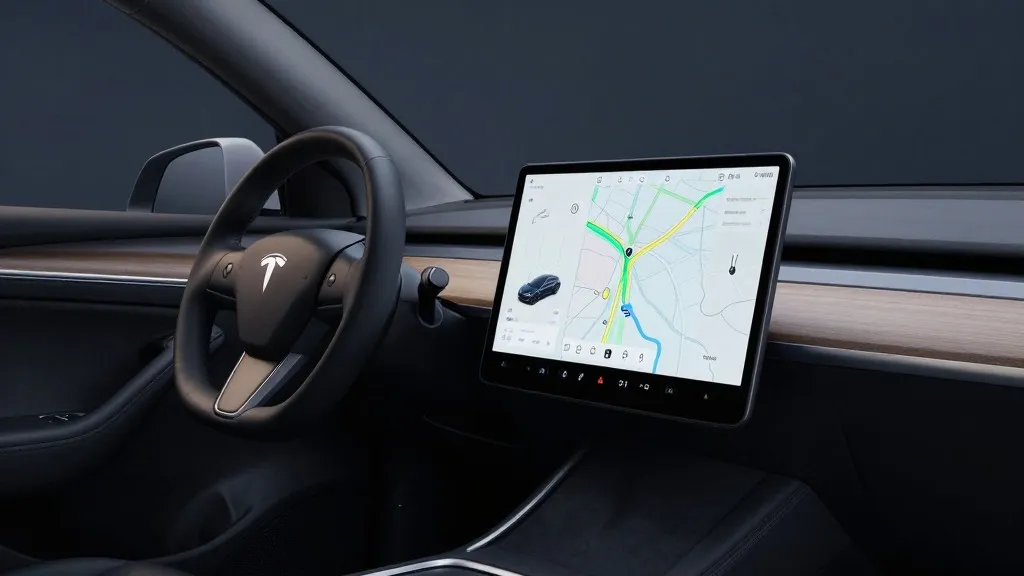
Tesla is now creating its own maps to solve persistent issues with its Full Self-Driving system.
The company made this announcement during its Q3 2026 earnings call. Ashok Elluswamy, Tesla's VP of AI, addressed a shareholder question regarding mapping. The investor noted that speed limits, parking, and route selection remain significant problems. Elluswamy agreed that the company should not rely on outside data for these tasks. He stated that Tesla is building a new AI-based mapping and navigation architecture. This system will use data collected by the fleet to learn individual driver preferences. It will also respond to voice commands. The technology will handle the start and end of trips in FSD v15. Navigation and parking features will follow in the coming months.
This move marks a shift for Tesla. In 2015, the company told Fortune it was building high-precision maps for Autopilot. These maps used data from customer cars. However, at its Autonomy Day in 2019, Elon Musk called high-precision lane maps a mistake. He said relying on them makes a system brittle. Musk stated that Waymo needed lidar and detailed maps, while Tesla would use cameras and AI alone. Seven years later, Tesla is building a map layer from its own fleet. This is to fix issues its vision system cannot resolve.
Tesla has used navigation maps before. Building its own maps is not a direct contradiction of that history. However, the problems Tesla is trying to fix involve understanding the environment. FSD often fails at this, particularly with speed limit signs. In September 2026, a Belgian road safety group tested FSD in Brussels. It found that FSD sped in 55% of the 30 km/h zones tested. The average speed was 44 km/h. The car's screen showed a 50 km/h limit in most of those zones. In the US, NHTSA is considering an investigation into claims that Tesla Robotaxis speed through school zones. This covers about 1,000 Model Y and Cybercab vehicles.
This effort brings Tesla closer to how Waymo operates. Waymo maps cities by driving sensor-equipped vehicles before launching service. It keeps maps updated as its fleet drives. Tesla is describing a similar process. Its cars collect data. That data feeds a Tesla-built map to help every car drive better. The main difference is that Waymo's cars use lidar. Tesla is building a map to fix issues its vision system cannot solve.
Tesla has pushed unsupervised FSD in customer cars to Q2 2027. It will only be available inside its Robotaxi fleet. Waymo has been running a driverless service for years. Both companies are solving the same problem in similar ways. Only one uses lidar.
Source: Electrek