Ukraine faces satellite gap as Starlink wobbles
Reliance on Elon Musk’s network is prompting urgent European and Ukrainian efforts to secure alternative communications infrastructure.
By Thomas Reynolds ·
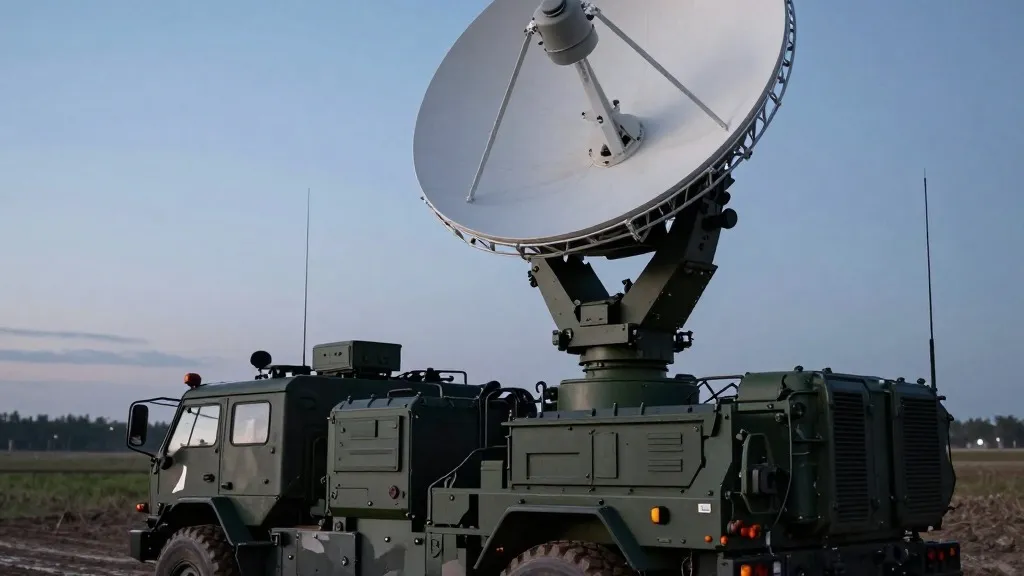
Tens of thousands of commercial satellite terminals have been purchased by the United States, Poland, and Germany to sustain Ukraine’s digital lifeline. This massive hardware deployment represents the core of a communications strategy that has been under strain due to recent service interruptions and the growing political influence of the service’s owner, Elon Musk. As the reliability of the network fluctuates, the question of how to maintain connectivity without a singular, dominant provider has become a primary concern for Kyiv and its European allies.
The Starlink network has served as the backbone for Ukraine’s resistance to Russia’s full-scale invasion for several years. By providing high-speed internet and data streams to any user or vehicle equipped with a compact terminal, the system has enabled vital civilian communications and military operations. Its impact extends to the tactical level, allowing the Ukrainian military to remotely control drones and provide real-time guidance for air defense systems against Russian attacks and for strikes on deeper targets. The infrastructure has effectively bridged the gap between ground forces and their command structures, a capability that has become deeply embedded in the current operational doctrine.
Industry insiders describe the current landscape as one of limited alternatives. According to the head of hardware R&D at the Ukrainian defense firm BlueBird Tech, Starlink currently offers some of the best satellite coverage available. The executive noted that, when considering the combination of cost, availability, and ease of use, there are virtually no competitors. However, the practical application of the technology faces specific physical constraints. The primary limitation, as identified by the BlueBird Tech representative, is the necessity to position the antenna in a way that allows it to receive clear signals from the satellites, a requirement that can be challenging in complex battlefield environments.
The financial and logistical support for this network is substantial. The U.S. government and European nations have not only funded the acquisition of the commercial terminals but also covered the ongoing subscription fees. Beyond the commercial hardware, the U.S. government has granted the Ukrainian military access to Starshield, a military-grade version of the service. This advanced tier allows Ukrainian defense companies to test their technologies in direct cooperation with the military, leveraging the more robust capabilities of the Starshield platform to further enhance their operational edge.
The recent disruptions have highlighted the vulnerabilities inherent in relying on a single commercial entity for critical state functions. Musk’s political inclinations have increasingly influenced the service’s operations, leading to a perception of unreliability among some stakeholders. This shift is forcing a reevaluation of the long-term strategy. While Starlink remains the most efficient solution for immediate needs, the urgency to develop or secure alternative infrastructure is growing. The goal is to ensure that a single point of failure does not compromise the entire communications architecture during a critical phase of the conflict.
As the situation evolves, the focus is shifting from immediate access to long-term resilience. The interplay between commercial innovation and military necessity is creating a complex environment where technology, finance, and diplomacy intersect. For Europe and Ukraine, the challenge is no longer just about connecting devices, but about securing the digital sovereignty that underpins their defense capabilities. The coming months will likely see accelerated efforts to diversify the technological base, reducing the dependency on any single satellite provider while maintaining the high-speed, low-latency connections that modern warfare demands.
The stakes are high for both the immediate defense efforts and the broader geopolitical landscape. A stable communications network is essential for coordinating drone operations and maintaining civilian infrastructure. As the world’s largest communications satellite network continues to play a pivotal role, the lessons learned from its current instability will shape the future of how nations approach critical space-based infrastructure. The transition away from exclusive reliance on Starlink will be a gradual process, but the impetus for change is now firmly in motion.
Source: Ars Technica